
Article: Winter Clogs: Can You Wear Clogs in Cold Weather, and Which Styles Actually Work

Winter Clogs: Can You Wear Clogs in Cold Weather, and Which Styles Actually Work
Introduction
Clogs have a summer reputation, so the question comes up every autumn: do they have to go back in the box until spring?
The short is no. Winter should not keep you from wearing your favourite clogs, and in Sweden it never really has. Clogs come out of a working tradition in a country that spends half the year in the cold, and the wool sock they are worn with is part of the design rather than a workaround.
The answer comes down to what is under your foot. A traditional wooden clog sole conducts cold and soaks up water. Calou's sole does neither, and that one difference is what takes a clog from a summer shoe to something you can wear in January. This guide covers what holds up, where the real limits are, and which styles to reach for.

Can you wear clogs in winter?
Yes, and the sole is the reason.
A traditional wooden clog sole conducts cold and absorbs water. Calou's sole is cushioned polyurethane, which does neither. It insulates rather than transmitting cold, it repels water instead of soaking it up, and the platform construction lifts your foot off frozen ground, which matters more than people expect when you are standing still.
Grip is good on snow and wet pavements. On sheer ice it is not, but no sole without studs is, so that is a limit of footwear in general rather than of clogs.
The part that does need care is the upper. Leather and suede are still leather and suede, and road salt marks them. Treat them with a water-repellent protector before the season and wipe salt off early, and a pair will go through winter after winter.
The one real exception is the open-back clogs. Slingbacks and mules leave the heel exposed and let slush straight in, and no sole fixes that. Those are spring styles.
What makes a clog work in cold weather
| Factor | Why it matters in winter | What to look for |
|---|---|---|
| Sole material | Wood conducts cold and absorbs water. Polyurethane insulates and repels it | A cushioned PU sole rather than a solid wooden base |
| Height off the ground | Cold travels up from frozen pavement, so the further your foot sits above it, the warmer it stays | A platform construction rather than a flat sole |
| Coverage | Open backs and slingbacks lose heat fast and let slush in | A closed heel, or a boot shaft over the ankle |
| Sock room | A knitted wool sock needs real volume, not just length | A roomy toe box, or a style you can size up |
| Upper material | Suede marks more easily in wet; smooth leather cleans up better | Smooth or grained leather for wet days, suede for dry ones |
| Protection | Untreated leather absorbs water and road salt | Leather treated with a water-repellent protector before the season |
| Fastening | Laces and straps adjust around a thicker sock | Lace-up or buckle styles over fixed slip-ons |
| Grip | Snow is manageable; sheer ice is not, for any shoe without studs | Realistic expectations, and care on icy mornings |
The first two rows are the ones most winter guides skip. People judge winter footwear by how it looks and how high the shaft is, when the material under the foot and the distance between the foot and the frozen ground do most of the work.
Clogs or clog boots?
| Clogs | Clog boots | |
|---|---|---|
| Best season | Early autumn, mild winter days, indoors | Full autumn and winter, snow included |
| Warmth | Closed styles with wool are fine; open backs are not | Shaft covers the ankle and blocks draughts |
| Wet weather | Slush gets in over an open back | Sole repels water and grips well; keep the upper protected |
| Indoor work | Easy on and off | Warmer, slightly less convenient |
| Fit with thick socks | Can get tight | Lace-up and buckle styles adjust |
For most people, winter is when the clog boots in the range earn their place. Same cushioned sole, same silhouette, considerably more shoe.
Which Calou styles suit winter
| If you want | Style to consider | Why it works in winter |
|---|---|---|
| A classic Chelsea clog boot, easy on and off | Doris or Nora | Elastic side panels, nothing to fasten, 7.5cm heel on a platform |
| A lace-up that adjusts around thick socks | Bodil or Greta | Laces give you volume control once the wool goes on |
| An ankle boot that stays understated | Viola or Ingela | Covers the ankle, works under every trouser length |
| Something with more presence | Lou or Marita | Buckle straps and studs, for when the coat is plain |
| A little texture against a winter coat | Doris Fur Dot or Molly Cow | Pony hair and spotted detail read as winter rather than summer |
| Full coverage for the coldest days | Alma | Knee-high shaft, no gap between boot and hem |
| A clog you can still wear on dry winter days | Annika or Helena | Closed all round, no open back, room for a thick sock |

Avoid the open-back and slingback styles once the weather turns: Tindra, Lilja, Tyra and similar are summer shapes, and no sock makes them winter shoes.
Clogs and socks, a winter love story
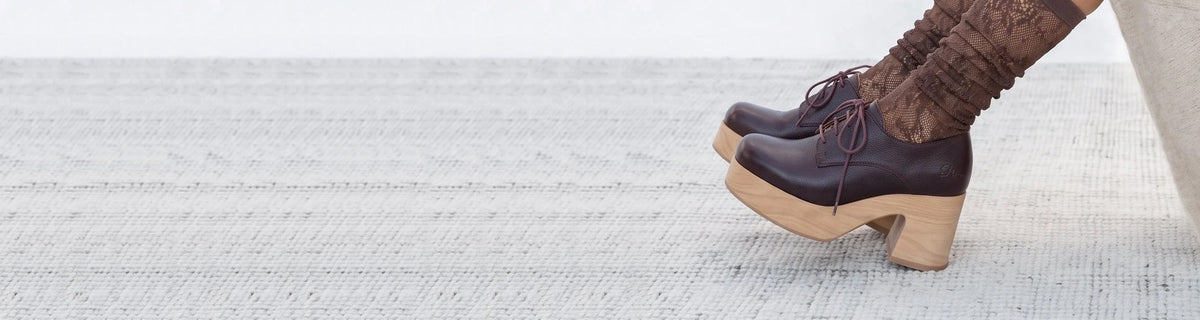
A thick knitted wool sock is the whole trick, and it is a deliberate look rather than a compromise. Ribbed wool with a cropped jean and a clog boot is about as Scandinavian as winter dressing gets, and it is the single easiest way to take a pair of clogs from September into January.
Wool is doing real work there, not just adding a colour. It holds warmth even when slightly damp, which cotton does not, and it absorbs moisture away from the foot rather than trapping it against the leather. A wool sock is better for the shoe as well as the foot.
Three practical notes:
-
Size with the sock on, or at least leave room for it. A clog that fits perfectly barefoot will be tight with a few millimetres of wool in it.
-
A summer pair that felt slightly roomy is often exactly right once you add a winter sock, so check what you already own before buying.
-
Laces and buckles beat slip-ons in winter, because they adjust around a thicker sock rather than fighting it.
For styling, cropped and straight-leg jeans work best since they let the sock show, which is the point. Longer skirts and dresses sit well over a boot shaft. The one combination to avoid is a thin dress sock in a clog: too little warmth, and it slips.
Looking after leather and suede through the season
Treat both leather and suede with a water-repellent protector before winter starts, not after the first wet day. If a pair does get wet, wipe off the excess and let them dry naturally away from radiators and direct heat, which cracks leather as it dries.
Salt marks should come off as soon as you notice them rather than at the end of the season. Our full guides to caring for leather boots and caring for suede cover the detail.
The short version
Clog boots handle winter properly, snow included, because the sole insulates and repels water where a wooden sole conducts cold and soaks it up, and the platform keeps your foot off the frozen ground. Ice is the one honest limit, as it is for any shoe without studs. Protect the leather before the season, size with your socks on, keep the open-back styles for spring, and let the wool do the rest.
Stay warm out there.
Frequently asked questions
Can you wear clogs in winter?
Yes, and the sole is the reason. A wooden clog sole conducts cold and absorbs water, while Calou's cushioned polyurethane sole insulates and repels it, and the platform construction lifts the foot off frozen ground. Grip on snow and wet pavement is good, though sheer ice is beyond any sole without studs. Clog boots handle winter best because the shaft covers the ankle, and closed clogs with a thick knitted wool sock are comfortable on milder days and indoors. Open-back and slingback styles are the exception: slush gets in and the heel stays exposed, so keep those for spring.
Are clogs warm enough for winter?
Warmer than you would expect, because of what is underfoot. Cold mostly reaches the foot through the ground, and a wooden sole conducts it straight up. Calou's polyurethane sole insulates instead, and the platform construction raises the foot further off frozen pavement. Add a thick knitted wool sock, which holds warmth even when slightly damp, and a clog boot handles proper winter comfortably. Coverage is the other half of it: an open-back clog loses heat whatever sock you wear, so for cold weather choose a boot or a closed clog.
Can you wear clogs in the snow?
Clog boots, yes. Calou's cushioned polyurethane sole repels water rather than absorbing it the way a wooden sole does, it insulates against cold rather than conducting it, and the platform construction keeps your foot raised off frozen ground. Grip on snow is good. On sheer ice it is not, but that is true of any shoe without studs. Open-back clogs are a different matter: slush gets straight in and the heel is exposed, so those are spring styles. Whichever you wear, treat the leather or suede upper with a water-repellent protector before winter and clean salt off early.
Should you size up for winter socks?
Usually you do not need a different size, but you do need to account for the sock. A thick knitted wool sock takes up real volume, so a clog that fits perfectly barefoot can feel tight with wool in it. Try the pair on with the socks you will actually wear. If you are between sizes and plan to wear them through winter, take the larger option. A pair that felt slightly roomy in summer is often exactly right once you add a winter sock.
How do you protect leather clogs from salt and water?
Treat them before winter starts rather than after the first wet day. Apply a water-repellent protector to leather and suede at the start of the season, and reapply through it. If a pair does get wet, wipe off the excess and let them dry naturally, away from radiators and direct heat, which cracks leather as it dries. Remove salt marks as soon as you notice them rather than at the end of the season, since dried salt draws moisture out of the leather and leaves white tidemarks that are harder to lift later.
Are clog boots good for winter?
Clog boots are the best winter option in the Calou range. The cushioned polyurethane sole insulates rather than conducting cold, repels water rather than absorbing it the way wood does, and sits on a platform that keeps the foot off frozen ground. The shaft adds coverage over the ankle and blocks draughts. Lace-up styles like Bodil and Greta adjust around a thicker sock, Chelsea styles like Doris and Nora are quickest on and off, and Alma gives full coverage for the coldest days. Snow is manageable; ice asks for the same care any shoe without studs does.
Which clogs should you not wear in winter?
Open-back and slingback styles. Tindra, Lilja, Tyra and similar summer shapes leave the heel exposed, let slush in and leave the foot loose in the shoe on a wet pavement, and no sock solves that. Keep them for spring. If you want to wear clogs rather than boots through winter, choose a closed style like Annika or Helena, which cover the whole foot and take a thick wool sock comfortably.