
How to Choose the Right Heel Height for Clogs and Boots
The right heel height depends on more than the number measured at the back of the shoe. Choose low heel clogs for a grounded everyday feel, high heel clogs when you want more lift, and clog boots when you want more coverage. Then compare the platform, fit, sole construction, and the amount of walking or standing in your day.
At Calou Stockholm, all three categories share the character of a classic clog with a softer, flexible polyurethane sole. This expanded guide explains the terms shoppers most often need to understand, compares each category, and gives you a practical checklist for choosing a pair.

First Understand Heel Height Platform Height and Heel Drop
The total heel height is not the same as the incline your foot feels. On a platform shoe, part of the height sits under the front of the foot. The useful comparison is the difference between the back heel and the front platform, sometimes called the effective heel height or heel drop.
Effective heel height equals heel height minus platform height
For example, two shoes may look equally high from the outside but feel different if one has a thicker front platform. A smaller heel-to-platform difference places the foot at a gentler angle than the same heel height on a flat front sole. It does not guarantee comfort, but it gives you a more useful starting point than the back measurement alone.
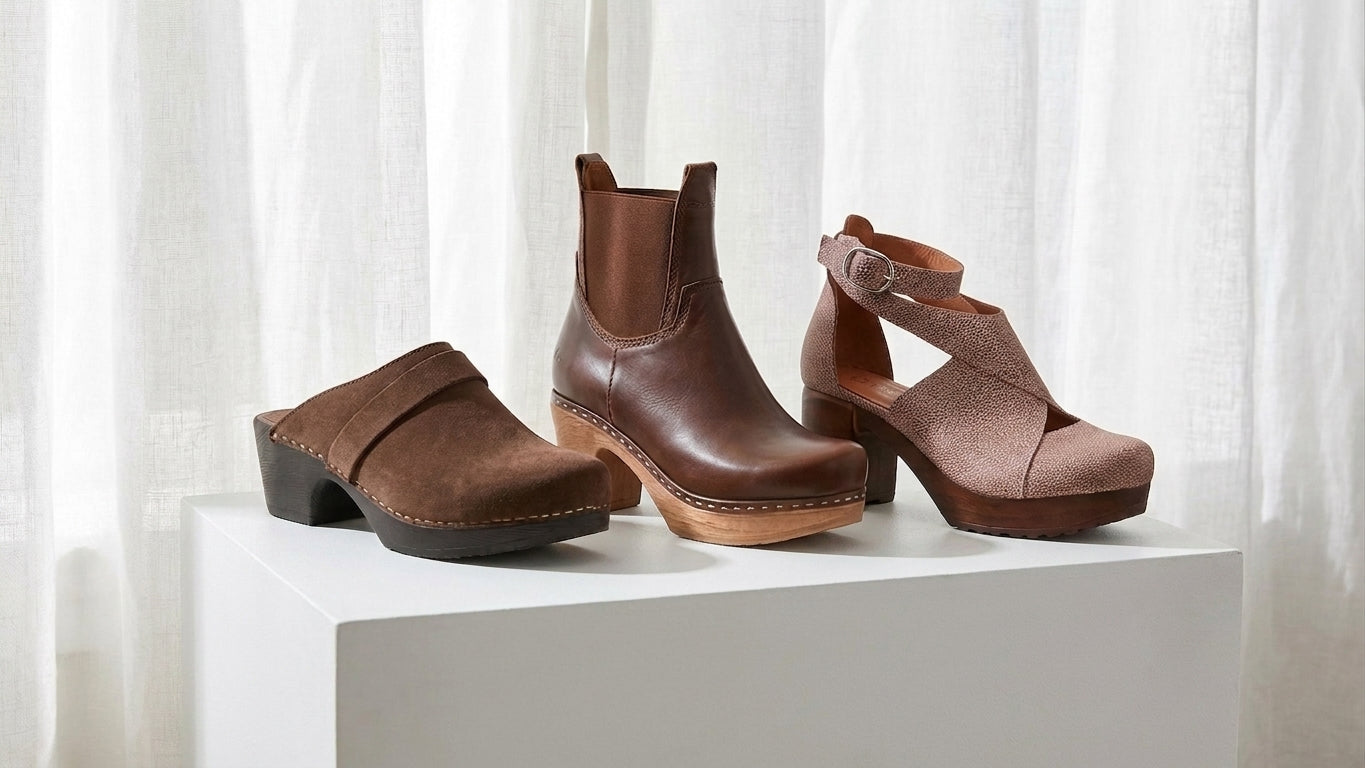
Low Heel Clogs High Heel Clogs and Boots at a Glance
Start with the feeling and function you want. Heel height changes the line of the shoe, while a boot also changes how much of the foot and ankle is covered.

When Low Heel Clogs Feel Right
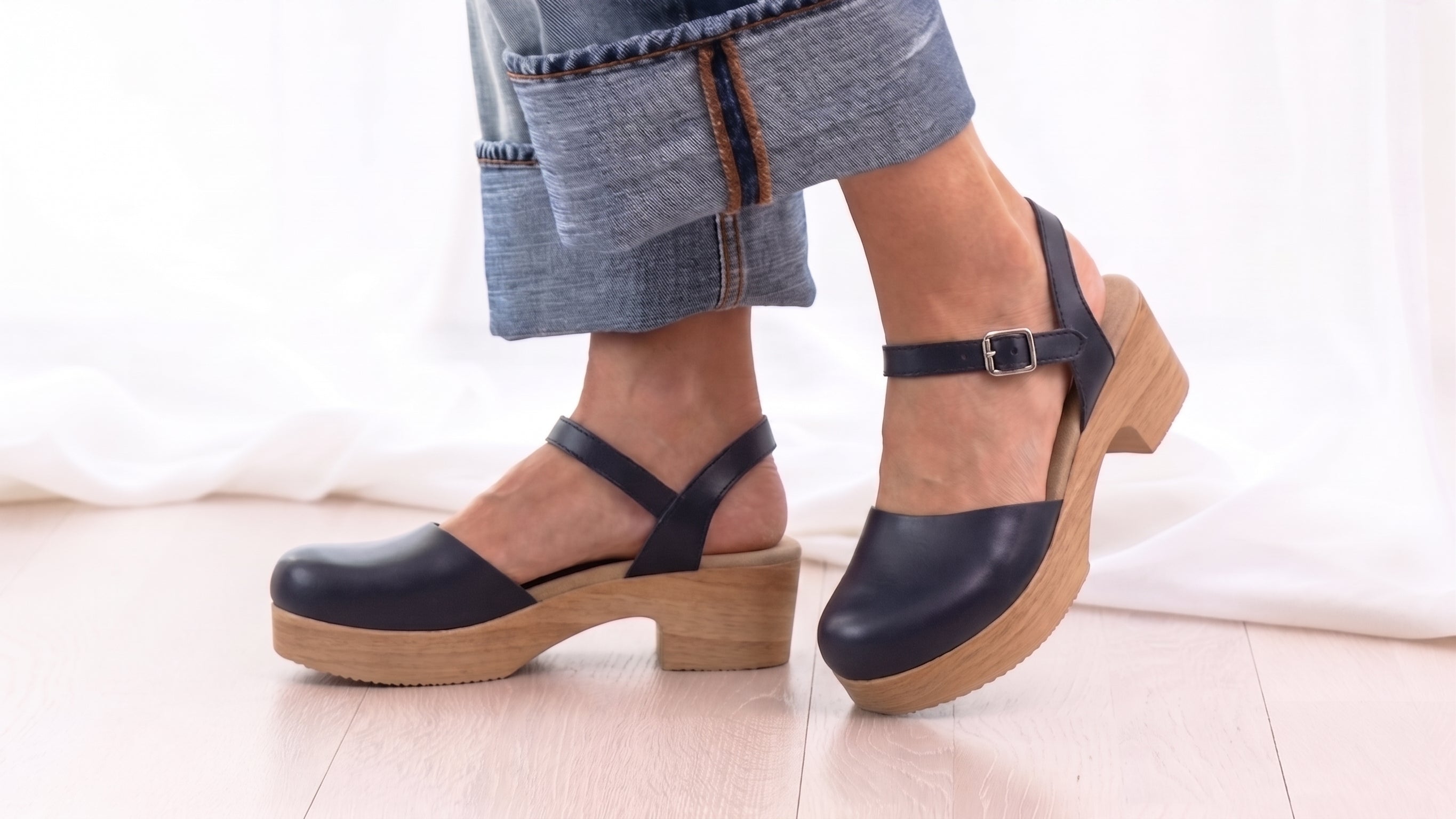
Low heel clogs are a natural place to start when you want an everyday shoe with a more grounded feel. They work well when your day includes a mix of standing, walking, commuting, or moving between plans and you prefer less lift underfoot.
Calou’s low heel clog collection includes leather and suede styles built on the brand’s soft, bendable polyurethane sole. The shape keeps the visual character of a traditional clog, while the sole is designed to flex as you walk.
Choose a low heel if you prefer
-
A more grounded silhouette for everyday outfits
-
Less lift for work, travel, or busy days
-
A clog that can move easily between casual and polished styling
Low does not automatically mean right for everyone. The upper, fit, footbed, and sole still shape how a shoe feels. Use heel height as one part of the decision, not the whole decision.
When High Heel Clogs Feel Right
High heel clogs are the better choice when you want more height and a more defined line without leaving the clog silhouette behind. They can add lift to everyday looks and feel especially natural when you want a dressier finish for the city, dinner, or an occasion.
In Calou’s high heel clog collection, the soft, flexible sole remains central to the design. The current heel-height guide describes the difference between the heel and the front platform as 4 cm. That heel-to-platform difference is useful because it tells you more about the angle your foot experiences than the back height alone.
Choose a high heel if you prefer
-
More lift while keeping the character of a clog
-
A slightly more elevated or occasion-ready silhouette
-
A platform that reduces the difference between the front and back of the shoe
Your own comfort with height matters. If you are deciding between two styles, compare the heel-to-platform difference, the shape of the upper, and any fit notes on the individual product page.
When Clog Boots Are the Better Choice
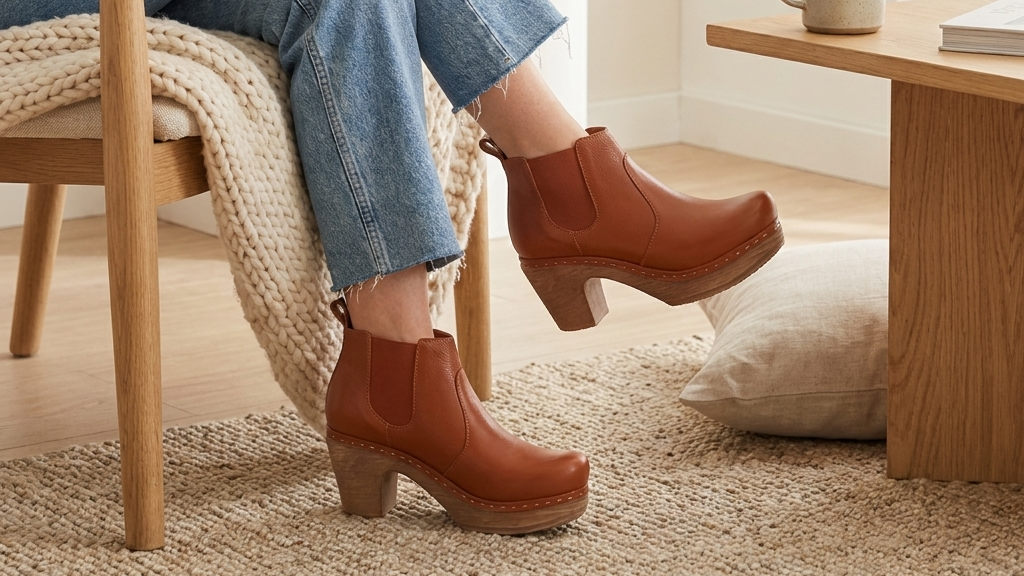
Boots answer a slightly different question. Rather than choosing only between a low or high heel, you may want more coverage around the foot and ankle. A clog boot keeps the distinctive clog-inspired base in a more enclosed silhouette.
Calou’s women’s clog boots are designed in Stockholm and include leather and suede options. Instead of a rigid wooden base, the boots use a soft, flexible polyurethane sole designed for everyday comfort.
Choose boots if you prefer
-
More coverage than an open clog silhouette
-
A style suited to cooler days or more covered outfits
-
The clog look in an ankle-boot or higher-shaft shape
Because boots can come in different heel and shaft shapes, check the individual product page rather than treating every boot as one fixed height. Coverage and heel height are separate choices.

Comfort Is About More Than Heel Height
Heel height is easy to compare, but it is only one part of how a shoe feels. Flexibility, cushioning, shock absorption, the footbed, and fit all affect the experience underfoot.
Calou’s signature sole is made from cushioned polyurethane and designed to flex as you walk. The brand also describes its shoes as having a contoured, padded footbed. Together, these details distinguish Calou’s construction from the rigid wooden base associated with traditional clogs. Read more in What makes Calou Stockholm clogs unique? and the guide to clogs versus wooden clogs.
Choose Your Heel Height by How You Will Wear It
A useful heel-height guide should start with the day ahead, not only the outfit. Use the table below as a first filter, then check the exact product details and fit.
Are Clogs Good for Walking and Long Days
The right clogs can work well for everyday walking, but heel height alone cannot answer the question. Look for a sole that flexes, cushioning that softens impact, a stable fit, and enough room for your toes. The distance, walking surface, pace, and your own feet still matter.
Calou builds its clogs and boots with cushioned, flexible, shock-absorbing soles rather than rigid wooden bases. For a deeper answer, read Are Clogs Good for Walking?. If you have persistent foot pain, balance concerns, or prescribed footwear needs, ask a qualified clinician for individual advice.
How Should Clogs Fit
Clogs should feel secure without pressing or forcing your toes into an unnatural position. Fit varies by shape, upper, and whether the style is backless, strapped, or fully enclosed, so use the exact product page as the final guide.
-
Your toes should have room to rest naturally rather than touching or being compressed by the front.
-
The upper should hold the foot without pinching across the instep or sides.
-
Your foot should stay centred on the footbed instead of sliding from side to side.
-
If you plan to wear socks, measure and assess the fit with a similar sock thickness.
-
Any strap or fastening should feel secure without creating pressure points.
Calou’s size guide recommends measuring both feet while standing, using the longer measurement, adding 0.5 cm, and then comparing the result with the chart. Check the product page as well because individual styles may have their own fit notes.
What to Check Before You Order
-
Heel-to-platform difference, not only the total back height
-
Low heel, high heel, or boot coverage for the way you will wear the shoe
-
Upper shape, toe room, and any adjustable strap or fastening
-
Sole flexibility, cushioning, and shock absorption
-
Material and whether you plan to wear socks or tights
-
Both-foot measurement plus the fit notes for the exact style
The Right Choice Should Feel Like You
Choose low heel clogs when you want an easy, grounded everyday shoe. Choose high heel clogs when you want more lift and a refined silhouette. Choose boots when coverage is the priority. There is no single correct heel height; the best option is the one that suits your day, your style, and the way you feel most comfortable moving.
Explore Calou’s low heel clogs, high heel clogs, and clog boots to find the shape and height that feel right for you.
Frequently Asked Questions
What heel height is best for everyday wear?
There is no single heel height that is best for everyone. For everyday wear, start with the lowest heel-to-platform difference that gives you the look you want, then consider fit, cushioning, sole flexibility, and how long you will be standing or walking. A low heel may suit shoppers who prefer a grounded feel, while a platform high heel may still feel wearable to someone comfortable with extra lift. Your own feet and routine are the final test.
Is platform height the same as heel height?
No. Heel height is measured at the back of the shoe, while platform height is the thickness under the front of the foot. Subtracting the platform from the heel gives a useful estimate of the effective heel height or heel drop. This difference helps explain why two shoes with the same total heel height can feel different. Shape, width, sole flexibility, and fit still matter, so the calculation is a comparison tool rather than a guarantee of comfort.
Are high heel clogs comfortable?
High heel clogs can be comfortable when the height, platform, sole, and fit work for the wearer. Calou’s high heel clogs use the brand’s soft, flexible sole, and the current guide states that the difference between the heel and front platform is 4 cm. That does not guarantee the same experience for every person, so consider your comfort with height and review the fit notes for the exact style you are considering.
Are clogs good for walking all day?
The right clogs can be suitable for everyday walking, but no shoe is right for every person or every distance. Look for cushioning, a flexible sole, shock absorption, a stable fit, and enough toe room. Calou clogs and boots use a soft polyurethane sole rather than a rigid wooden base. For a long travel day or a job spent on your feet, test the exact pair gradually and consider the surfaces and distances you expect to cover.
Should clogs fit snug or loose?
Clogs should feel secure without squeezing the toes, instep, or sides of the foot. Your foot should stay centred on the footbed and should not slide from side to side. Backless clogs can feel different from boots or strapped styles, so follow the fit notes for the exact model. If you will wear socks, assess the fit with a similar thickness. A shoe that is painful, unstable, or makes you grip with your toes is not fitting well.
Can you wear socks with clogs?
Yes, many clogs can be worn with socks or tights. The important point is to allow for the added thickness when you measure and choose your size. A clog that feels right barefoot may feel tighter with a wool sock, especially across the instep or toe area. Check whether the upper or strap can accommodate the way you plan to style the shoe, and use the product-specific fit notes before ordering.
Are clog boots higher than clogs?
Not necessarily. The word boot mainly describes coverage and shaft shape, not a single heel height. Calou’s clog-boot collection includes different silhouettes, so compare the exact heel and platform details on each product page. Choose boots when you want more coverage around the foot and ankle; choose between low and high heel shapes based on the amount of lift you prefer.
What makes Calou clogs different from traditional wooden clogs?
Calou clogs and boots use a soft, flexible polyurethane sole instead of a rigid wooden base. Calou also describes its construction as cushioned and shock-absorbing, with a contoured, padded footbed. This keeps the visual character of a classic clog while creating a more flexible everyday shoe. Calou shoes are designed in Stockholm and handcrafted in Italy and Portugal.
How should I choose my Calou shoe size?
Measure both feet while standing, use the longer measurement, and add 0.5 cm before comparing it with Calou’s size guide. Then check the individual product page for any style-specific sizing advice. Measuring both feet matters because one foot may be slightly longer than the other. If you expect to wear the pair mainly with socks, measure and judge the fit with a comparable sock thickness rather than assuming your usual size will feel identical.